
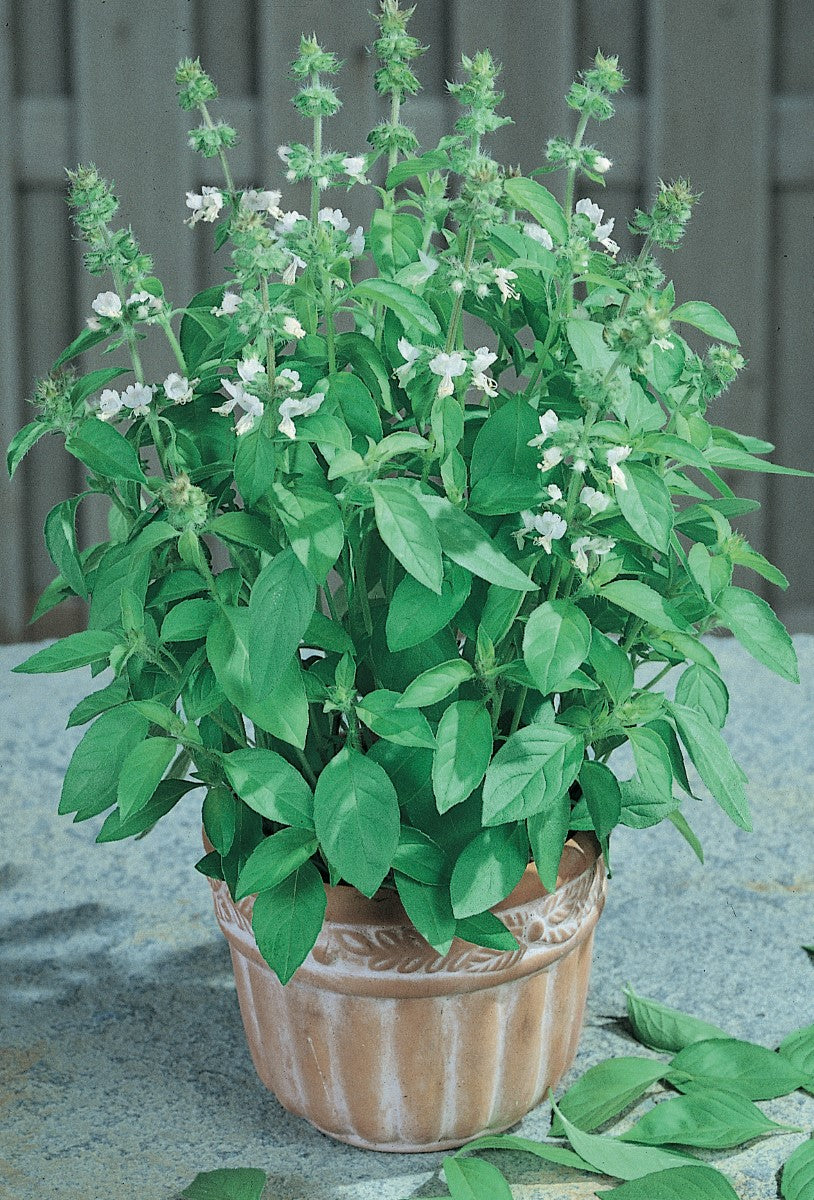

Description
Lemon Basil, scientifically known as Ocimum americanum x basilicum, is cherished for its bright green leaves that emanate a refreshing lemon scent when crushed. Aside from its aromatic allure, its petite white flowers bloom during Djilba (late winter to early spring), adding a touch of elegance. Gardeners can use Lemon Basil for both culinary and ornamental purposes, making it a versatile addition to any garden.
Whether in the ground, pots, or a vege/herb garden, this herb flourishes best when placed in a sun-kissed spot with occasional shade. For those cultivating in sandy soils, it's beneficial to mix in compost and organic matter to ensure optimal growth. Lemon Basil craves well-drained soil and regular watering, with reduced watering during Makuru (winter). To encourage a robust leaf growth and delay flowering, feed it with a herb/foliage fertiliser from Kambarang (spring) to Bunuru (summer). If desired, a light prune post-flowering during Djilba (late winter to early spring) can help maintain its compact structure.
| Botanical Name | Ocimum americanum x basilicum |
| Common Name | Lemon Basil |
| Cultivar | Lemon Basil |
|
Classification |
Herbs and Veges |
| PBR Name | |
| Origin | Africa, India |
| Foliage | Evergreen |
| Height | 40 - 60 cm |
| Width | 40 - 60 cm |
| Light | Full Sun |
| Soil | Loamy, rich soil or potting mix. |
| Water Requirement | Don't allow soil to dry out, water moderately. |
| Lifespan | Annual |
| Flower Colour | Purple, white |
| Flower Time | Birak, Bunuru (Early to Late Summer) |
| Toxicity | Edible plant, non-toxic to humans and animals. |
Disclaimer:
Information is intended as a guide only.
Unless otherwise stated, all images are examples only and not photos of the actual plants for sale.
Licensed images are used with permission of the license holder.
Payment & Security
Your payment information is processed securely. We do not store credit card details nor have access to your credit card information.